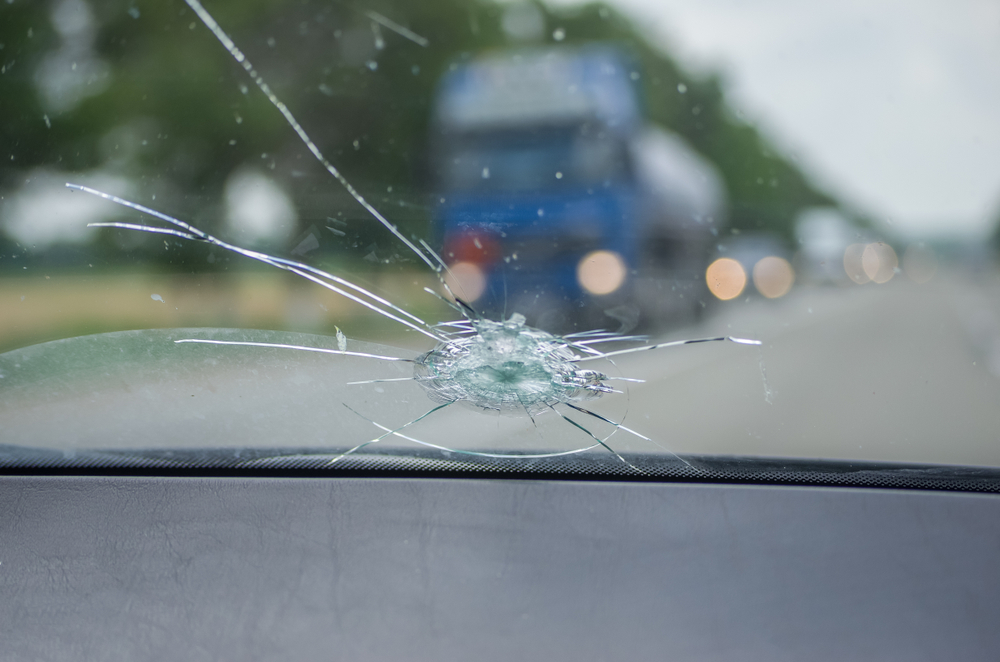
A rock chip near the edge of your windshield may still be repairable, but location is only one part of the decision. There is no single edge-distance rule that applies to every chip, windshield, and repair situation.
For rock chip repair, a technician typically needs to look at the complete damage pattern, including:
● How close the chip or any extending crack is to the windshield edge
● The size and depth of the impact
● Whether cracks are spreading away from the chip
● Whether the damage affects the driver’s primary viewing area
● Whether there are multiple impacts or contamination inside the break
Damage at or extending to the edge deserves particular attention because windshield edges can be sensitive to stress. Industry terminology defines an edge crack as a crack that reaches an edge of the glass.
If you’re unsure whether rock chip repair is appropriate, an in-person inspection is the most reliable way to determine whether the damage can be repaired or the windshield needs another solution.
Why the Location of a Windshield Chip Matters
A pebble kicked up on I-5 or SR-167 can leave what looks like a tiny mark on the windshield. Where that impact lands can matter just as much as how large it appears.
A windshield is laminated glass, and damage can take several forms, including bullseyes, star breaks, combination breaks, and cracks extending from an impact point. Industry repair standards evaluate the characteristics of the complete break rather than relying on appearance alone.
That is why two chips that look similar from the driver’s seat may receive different recommendations after inspection. One may be a relatively contained impact in a favorable location. The other may have a small fracture running toward the perimeter or deeper damage that changes its repairability.
If you spot a new chip, getting it checked sooner also helps keep dirt, moisture, and normal road exposure from complicating the damage.
Why Rock Chips Near the Windshield Edge Need Extra Attention
The perimeter of the windshield is an important area to inspect carefully. A chip close to it is not automatically beyond repair, but technicians need to determine whether the break itself or any crack extending from it reaches the edge.
The Repair of Laminated Automotive Glass Standard distinguishes between a crack that does not reach an edge and an edge crack, which does. It also emphasizes evaluating laminated-glass damage consistently when deciding whether repair is appropriate.
Several details can change the recommendation:
- Whether the impact is merely near the perimeter or actually connects to it
- Whether small fracture lines are extending from the chip
- The overall size and configuration of the break
- How deeply the outer glass layer has been damaged
- Whether additional stress has caused the damage to spread
This is why measuring from the chip to the molding with a ruler does not necessarily give you a reliable answer. A technician needs to inspect the actual fracture pattern before determining whether professional windshield repair is suitable.
What If the Chip Is in the Driver’s View?
Distance from the edge is not the only location issue. Damage directly in front of the driver can require additional consideration because a repaired chip does not necessarily become completely invisible.
Windshield repair is designed to fill and stabilize appropriate damage. Even when the repair performs properly, some evidence of the original impact can remain visible. Industry guidance recognizes that assessing repair quality involves more than expecting the blemish to disappear completely.
For a chip in or near the driver’s primary viewing area, a technician may consider:
- Its exact position relative to the driver’s view
- The type and size of the break
- The amount of visible damage before repair
- Whether repairing it could leave an unacceptable visual obstruction
That makes a tiny chip in front of the steering wheel a different situation from a similarly sized chip near the passenger side.
Avoid assuming that “small” automatically means repairable. Location and visibility can change the recommendation.
Do Multiple Rock Chips Change Whether Repair Is Possible?
They can. When several impacts are present, the technician needs to evaluate the windshield as a whole rather than treating every chip as an isolated spot.
One small impact may be straightforward to assess. Several chips, intersecting cracks, or damage distributed across different portions of the glass can create a more complicated repairability decision.
A technician will generally want to know whether:
- Each impact is separate or connected by cracking
- Any cracks are extending toward the perimeter
- One or more impacts are in a critical viewing location
- The windshield contains older damage in addition to the newest chip
- The complete damage pattern remains suitable for repair
The key point is that counting chips alone does not tell the entire story. Their type, position, depth, and relationship to one another matter too.
For Kent-area drivers who regularly encounter freeway construction, loose gravel, and road debris, it is worth having multiple impacts evaluated rather than assuming each one can simply be filled separately.
Can Dirt, Water, or Old Damage Affect Rock Chip Repair?
Yes. A fresh rock chip exposes a small damaged area to the environment. As the vehicle continues to be driven, moisture and debris can work their way into the break.
Professional repair involves removing air from repairable damage and filling the break with resin. The condition of the break therefore matters when a technician evaluates it.
Older damage may contain:
- Dirt or road residue
- Moisture
- Previous repair material
- Additional cracking that developed after the initial impact
Contamination does not automatically mean a windshield cannot be repaired, but it is another reason not to ignore a chip for weeks or months.
Until you can have the windshield inspected, avoid unnecessarily stressing the damaged area. Sharp temperature changes and normal vibration can contribute to the progression of existing windshield damage, so an early evaluation can preserve more options.
Why an In-Person Windshield Inspection Is the Best Answer
Photos can help identify the general type and location of a chip, but repairability often comes down to details that are easier to evaluate directly.
During an inspection, a technician can look closely at the impact point, fracture lines, depth, location, surrounding glass, and whether the damage reaches the windshield edge. That provides a better basis for a repair-or-replace decision than applying one universal measurement.
This distinction matters especially when the damage:
- Is very close to the perimeter
- Has one or more cracks extending from it
- Sits in the driver’s primary field of view
- Appears deeper than a simple surface mark
- Is surrounded by other chips or cracks
Industry standards are intended to help technicians evaluate repairable laminated-glass damage consistently, but the condition of the individual windshield still matters.
For drivers around Kent, that means the safest answer to “Is this chip too close to the edge?” usually comes from looking at the actual glass, not estimating the distance from inside the car.
Get an Edge Chip Checked Before It Spreads
A rock chip near the windshield edge does not automatically mean the entire windshield needs to be replaced. It does mean the damage deserves a closer look.
Size, depth, crack pattern, visibility, contamination, and exact location all help determine whether repair is appropriate. If you’re driving around Kent with a fresh chip from I-5, SR-167, or another debris-heavy route, having it evaluated early can give you a clearer picture of your options.
If you’re unsure whether your chip is repairable, Lucky Dog Auto Glass can inspect the damage and help you determine the appropriate next step without relying on a one-size-fits-all edge measurement.